


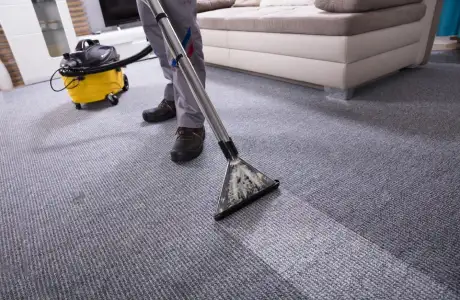
You wake up stuffy. You sneeze when you drop onto the couch after work. You feel better at the office than in your own apartment. Dust mites may be part of the reason. They live in almost every home, and a Manhattan apartment gives them plenty of places to hide: a bed used every night, an upholstered sofa, a wool rug, and wall-to-wall carpet in an older building.
This guide explains where dust mites live, what you can do yourself this week, and what a professional dust mite cleaning service actually does for your carpets, rugs, sofa and mattress. We are 24 Hour Carpet Cleaning Service, based in the East Village and open around the clock. So we also cover how to book the work in the evening, overnight or early morning, without losing a day at home.
What dust mites are, and why they bother you
Dust mites are tiny relatives of spiders. You cannot see them without a microscope. They do not bite, and they do not spread disease. They feed on the skin flakes that people and pets shed every day, and they like warm, humid places.
The problem is not the mites themselves. It is the proteins in their droppings and body parts. These particles are fairly heavy. They settle into fabric and stay there until something stirs them up: sitting down on the sofa, walking across the rug, shaking out the sheets. Then they float in the air for a short time and you breathe them in.
Common signs of a dust mite allergy are sneezing, a runny or stuffy nose, and itchy or watery eyes. Symptoms are often worse in the morning or right after you make the bed. For some people with asthma, dust mites are a trigger. We are cleaners, not doctors. If you think you have an allergy, an allergist can test you and tell you for sure.
Where dust mites live in a Manhattan apartment
Mites need food (skin flakes), moisture, and a soft place to burrow. Any fabric that people use often is a good home for them.
Your mattress and pillows
This is usually the biggest source. You spend about a third of your life in bed. You shed skin, you sweat, and the mattress stays warm. In a studio, the bed may also be where you work, eat and watch TV, which adds even more.
Sofas, armchairs and sofa beds
Cushions trap skin flakes and body moisture the same way a mattress does. A sofa bed in a one-bedroom gets double duty: a couch by day and a guest bed by night.
Carpets and area rugs
Deep pile and wool fibers hold dust well below the surface. Wall-to-wall carpet in prewar bedrooms and thick area rugs over hardwood both collect allergen-heavy dust. The worst spots are usually next to the bed and in front of the sofa.
The spots people forget
Upholstered headboards, curtains, stuffed toys, pet beds and the throw blanket that lives on the couch all count.
What you can do yourself this week
Professional cleaning works best when you also change a few habits. These steps are simple and cost very little.
- Wash bedding every week in hot water. Sheets, pillowcases and duvet covers should go in water of at least 130°F, then a hot dryer. If your building laundry room has a hot or sanitize cycle, use it.
- Use zippered allergen covers. Covers for the mattress, box spring and pillows put a barrier between you and the mites inside.
- Vacuum slowly with a HEPA vacuum. Once or twice a week, go over carpets, rugs and sofa cushions. A HEPA filter keeps fine dust from blowing back out. If you are the one with allergies, ask someone else to do it, or wear a mask.
- Watch the humidity. Mites do best when indoor humidity stays above about 50 percent. A cheap hygrometer tells you where you stand. In summer, the air conditioner helps. In winter the radiators dry the air, so go easy on the humidifier.
- Dust with a damp cloth. A dry duster just moves the particles into the air.
- Freeze what you cannot wash. A small stuffed toy can go in a sealed bag in the freezer overnight, then into a gentle wash if the label allows.
Why vacuuming alone is not enough
A good vacuum picks up loose dust on top. But mites hold on to fibers with sticky pads on their legs, and a lot of the allergen sits deep in carpet pile, rug foundations and sofa foam. Vacuuming leaves much of it behind.
Hot water extraction, often called steam cleaning, goes deeper. Heated water is flushed into the fibers and pulled back out with strong suction. That rinse carries out dust, skin flakes, sweat salts, and many of the mites and their droppings. It is the method most professional cleaners use in homes with allergies.
To be honest about it: no cleaning method makes a home mite-free forever. Mites are part of normal indoor life, and they come back over time. The goal is to bring the numbers and the allergen down, then keep them down with the habits above.
What a professional dust mite cleaning service includes
A real dust mite cleaning is not one quick pass with a machine. Each type of fabric needs its own approach.
Wall-to-wall carpet
We start with a careful vacuum to lift dry soil. Then we pre-treat the traffic lanes and the area around the bed, clean with hot water extraction, and rinse well. The rinse matters. Soap left in the carpet attracts new dirt and gives dust something sticky to hold on to. See our carpet cleaning service for details.
Area, Oriental and Persian rugs
Wool rugs hold a surprising amount of fine dust in the foundation. They also need the right water temperature and gentle, wool-safe solutions so the colors do not run. Our rug cleaning team handles everyday area rugs and fine handmade pieces. If you own a wool or Persian rug, our guide to what a safe Persian rug cleaning includes walks through each step.
Sofas and upholstered chairs
Before anything touches a sofa, we check the fabric care tag. Some fabrics take water, some need a solvent, and some should only be vacuumed. Our post on couch cleaning codes W, S, W/S and X explains those letters. Then we clean the cushions, arms, back, and the seams where dust collects. Our upholstery and sofa cleaning page covers fabric and leather.
Mattresses
We vacuum the mattress closely, treat sweat marks and stains, then clean and extract with low moisture so it dries fast. New allergen covers on top make the result last longer. Learn more on our mattress cleaning page, or read our full guide to mattress cleaning for allergies.
The products we use
People with allergies or asthma often react to strong chemical smells, too. We use organic, plant-based products that are safe around kids and pets, so you are not trading one irritant for another. You can read more about us and how we work.
Why an evening or early-morning cleaning makes sense
Most people cannot take a whole day off to wait for a cleaner. We work 24 hours a day, 7 days a week, so you can pick a time that fits your life.
- Bedroom and mattress early in the morning. We clean before you leave for work. The mattress dries during the day and is ready for the night.
- Living room in the evening. We clean the sofa and rug after dinner while you settle into the bedroom.
- Late night for very sensitive people. The person with allergies can stay with a friend or go out while we work, then come back to fresh, dry rooms.
A few drying tips: crack a window, run a fan or the air conditioner, and keep pets and kids off damp areas. In winter, steady radiator heat actually helps carpets and sofas dry within a few hours. If you live in a doorman building or a co-op, check with the super about service hours and elevator rules before you book.
How often to clean for dust mites
Every home is different, but this rhythm works well for most Manhattan apartments where someone has allergies:
- Every week: hot wash for bedding, HEPA vacuum for floors and the sofa.
- Every 6 months: professional cleaning for carpets, area rugs and the sofa you use most.
- Once or twice a year: professional mattress cleaning, plus a wash of the mattress and pillow covers.
Homes with pets, young kids or someone with asthma may want carpets and rugs done more often.
Frequently asked questions
Does steam cleaning kill dust mites?
Hot water extraction removes many mites and much of the allergen from carpets, rugs, sofas and mattresses, and the heat helps. But no cleaning keeps a home mite-free forever. For the best result, pair a professional cleaning with a weekly hot wash of your bedding and good humidity control.
How often should I clean my carpets and mattress if I have allergies?
Most homes with allergies do well with carpets, rugs and the main sofa every 6 months, and the mattress once or twice a year. Vacuum weekly with a HEPA vacuum in between.
Are your products safe for kids, pets and people with asthma?
We use organic, plant-based products that are safe around kids and pets. If someone in the home has severe asthma, tell us when you book. We can plan for good airflow, and that person can stay out of the room until it is dry.
Can you come at night or very early in the morning?
Yes. We are open 24 hours a day, 7 days a week, and we serve all of Manhattan, from the East Village and the West Village to the Upper West Side and Harlem.
How much does a dust mite cleaning cost?
Carpet cleaning is $99 for 1 room, any size, and you save $20 when you book online. For rugs, sofas and mattresses, call us and we will give you a clear price for your pieces.
Book your dust mite cleaning in Manhattan
Call (347) 594-1164 any time. We are open 24/7 and serve all of Manhattan from our East Village location at 119 E 10th St (find us on Google Maps). Carpet cleaning is 1 room, any size, for $99, and you save $20 when you book online.
