


Manhattan apartments work hard all winter. Radiators dry out the air. Salt and slush ride in on every pair of boots. The windows stay shut, so dust has nowhere to go. When the first warm week finally comes, most of us open the windows and want the place to feel new again.
This spring cleaning checklist focuses on the things in your home that hold the most dirt: carpet, area rugs, sofas and mattresses. It goes in an order that makes sense for a small city apartment, and it shows which jobs are easy to do yourself and which ones are worth handing to a pro. Because 24 Hour Carpet Cleaning Service is open around the clock, the professional part can happen in the evening, overnight or early in the morning, so you don’t lose a whole Saturday to it.
Why Soft Surfaces Come First in a Manhattan Spring Clean
Your carpet works like a big filter. All winter it catches grit from the sidewalk, salt residue, soot from the street and the fine dust that radiators push around the room. Hard floors show dirt, so you mop them. Carpet hides it, so it keeps building up deep in the pile.
That grit is not just ugly. Every time you walk on it, the sharp little pieces rub against the fibers and wear them down. This is why the path from the front door to the couch turns gray first. A good spring clean pulls that grit out before it does more damage.
One rule before you start: clean from the top down. Dust shelves, window sills, radiator covers, vents and ceiling fans first. Whatever falls should land on the floor, and the floor gets done last.
Step 1: Clear the Floor, Then Vacuum Slowly
Move what you can
Pick up shoes, toys, cables, plants and small tables. The more open floor you have, the better every later step works.
Vacuum the right way
Most people vacuum too fast. Slow down. Go over each area in two directions, first north to south, then east to west. Use the crevice tool along baseboards, under radiators and in the corners where dust bunnies hide. Check the brush roll for wrapped hair, and empty the bin or bag when it’s half full, since a full one loses suction. If you can, slide the vacuum under the bed and the sofa.
Step 2: Deal With Leftover Winter Salt Marks
If you see white, crusty lines near the front door or a dull, stiff patch where boots sat on the rug, that’s road salt. Salt pulls moisture from the air, so those areas can stay slightly damp and attract even more dirt.
For synthetic carpet, blot the area with a clean towel and warm water, then blot again with a dry towel. Test any homemade mix on a hidden spot first. Be extra gentle with wool rugs, which don’t like harsh or acidic solutions. We go into more detail in our guide to winter salt and slush stains on carpets and rugs. If the white marks keep coming back after they dry, the salt is deep in the backing, and a hot water rinse is the real fix.
Step 3: Find and Mark Your Stains
Walk the whole apartment in good daylight. Look for coffee rings, wine drops, pet spots and dark traffic lanes. Here’s a simple trick: put a small piece of painter’s tape next to each spot. It peels off clean, and it makes sure nothing gets missed when the carpet is cleaned.
If you want to try a spot yourself, keep it simple:
- Blot, don’t rub. Rubbing spreads the stain and frays the fibers.
- Start with plain cool water on a white cloth.
- Never use bleach or strong oxygen powders on wool or colored rugs.
- For pet accidents, use an enzyme cleaner made for urine, and don’t soak the spot.
- Stop if color starts to transfer to your cloth.
Old stains that have been there all winter often need professional treatment. Scrubbing harder at home usually makes them bigger, not lighter.
Step 4: Deep Clean the Wall-to-Wall Carpet
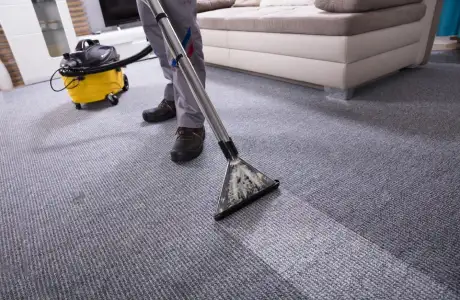
Vacuuming takes off the loose dirt on top. A deep clean gets the oily film and fine grit at the base of the fibers, which is what makes carpet look dull and gray. A good professional cleaning should include these steps:
- A careful vacuum to lift dry soil first.
- A pre-treatment on traffic lanes and marked stains.
- Hot water extraction, which flushes the fibers and pulls the dirty water back out.
- A clean rinse so no sticky soap is left behind.
- Grooming the pile so it dries evenly and looks fresh.
That rinse step matters more than most people think. Leftover soap is the main reason a carpet can look dirty again only weeks after a cleaning. You can read why in our post on why carpets look dirty again soon after cleaning.
We use organic, plant-based products that are safe for kids and pets, and the carpet dries fast, usually within a few hours. Spring is a great time for this, because you can open the windows and let fresh air speed things up. Our carpet cleaning is $99 for 1 room, any size.
Step 5: Area Rugs: Flip, Inspect and Know When to Get Help
Area rugs trap more dirt than you’d guess, because grit sinks through to the back and sits against the floor. Flip each rug over and vacuum the back side. You’ll often see a line of fine sand on the floor underneath when you lift it. Sweep that up, then vacuum the front.
Spring is also the season to look closely at wool rugs. Clothes moths get more active when it warms up, and they like dark, quiet spots: under the sofa, behind a bed, along a wall where nobody walks. Check those edges for thin, chewed patches or loose tufts.
Small cotton or synthetic rugs can often be handled at home. Wool, Persian and Oriental rugs are different. They can bleed color, shrink or get stiff if they are washed the wrong way. For those, our area rug cleaning uses a gentle method that fits the fiber and dyes of each rug.
Step 6: Sofas and Chairs: Check the Code First
Your couch probably saw a lot this winter: movie nights, takeout, a dog curled up in the corner. Start by taking off the cushions and vacuuming every crevice.
Before you clean any fabric, find the care tag under the seat cushions or on the frame. It will usually show a letter code like W, S, W/S or X. That code tells you whether water-based or solvent-based cleaning is safe, or whether it should only be vacuumed. Using the wrong method can leave water rings or fade the fabric. Our guide on couch cleaning codes explains each one in plain words.
Leather needs its own care after a winter of dry radiator heat. Wipe off the dust, then use a good leather conditioner so it doesn’t crack. For fabric and leather sofas, sectionals and dining chairs, our upholstery cleaning takes care of the deep dirt and body oils that home cleaning can’t reach.
Step 7: Mattresses: The Job Most People Skip
You spend about a third of your life on your mattress, and it collects sweat, skin flakes and dust mites the whole time.
Here’s a simple spring routine:
- Strip the bed and wash sheets, pillowcases and mattress covers in the hottest water the labels allow.
- Vacuum the whole mattress slowly with the upholstery tool, including the seams and sides.
- Open the window and let the bare mattress air out for a while.
- Rotate it end to end so it wears more evenly.
Yellow sweat marks, old spills and allergy problems call for more than a vacuum. Our mattress cleaning lifts stains and buildup from the top layers, which can make a real difference if anyone in your home deals with allergies.
Step 8: Plan Around Your Building and Your Schedule
In Manhattan, the hardest part of spring cleaning is often the logistics. A few tips that save time:
- Doorman and co-op buildings: tell the front desk ahead of time, and ask if the elevator needs to be reserved or if work has to happen during set hours.
- Walk-ups: clear the hallway and stairs near your door so equipment can move freely.
- Busy weeks: book an evening, overnight or early-morning time so the work is done before your day starts.
- Pets: plan a quiet room for them while the cleaning happens.
We serve all of Manhattan from our East Village base at 119 E 10th St. You can find us on Google Maps or learn more about our team.
Your Quick Spring Cleaning Checklist
- Dust from the top down: shelves, vents, fans, radiator covers.
- Clear the floor and vacuum slowly in two directions.
- Blot out leftover winter salt marks near the door.
- Mark stains with painter’s tape.
- Deep clean wall-to-wall carpet with hot water extraction.
- Flip area rugs, vacuum both sides and check wool for moth damage.
- Vacuum the sofa, check the fabric code and condition leather.
- Wash bedding hot, vacuum and air out the mattress.
- Talk to your building and pick a time that fits your day.
Frequently Asked Questions
How often should I deep clean the carpet in my apartment?
For most homes, once a year is a good baseline, and spring is a natural time to do it. If you have pets, small kids or a lot of foot traffic, every six months keeps the carpet in better shape.
Should I vacuum before the carpet cleaners come?
A quick vacuum and clearing small items off the floor helps the cleaning go faster and lets more of the carpet get treated. You don’t need to move heavy furniture.
Can you clean in the evening or early in the morning?
Yes. We are open 24 hours a day, 7 days a week, so you can book a time that works around your job, your kids or your building’s rules.
Are your products safe for kids and pets?
Yes. We use organic, plant-based products that are safe for kids and pets.
How long does it take for the carpet to dry?
The carpet dries fast, usually within a few hours. Opening windows and running a fan helps, which is easy to do on a mild spring day.
Book Your Spring Cleaning
Ready to make your apartment feel fresh again? Call 24 Hour Carpet Cleaning Service at (347) 594-1164. We’re open 24/7 for carpets, rugs, sofas and mattresses anywhere in Manhattan. Carpet cleaning is 1 room, any size, $99, and you can save $20 when you book online.
